
a writer’s vanitas
-
Click to read my latest post:
The Stable Boy: A Witness of Divinity
_______________________________________________________________________________
What’s a Writer’s Vanitas all about?
Life is fleeting, and so is the spark of inspiration. As writers, thinkers, and creators, we dwell in the delicate tension between time’s passing and our desire to leave something meaningful behind—a useful legacy that outlives us. A Writer’s Vanitas explores this profound balance. It’s a reflection on the symbols that remind us of life’s impermanence: the skull that whispers of mortality, the hourglass that measures fleeting moments, the tulip that blooms only to fade, and the quill that transforms our ephemeral thoughts into lasting expressions.
In this space, we embrace the humbling truth that our stories are both finite and eternal. They are finite because our time is limited, and eternal because every word we write becomes a thread in the grand tapestry of human experience. Here, we reflect on the beauty, fragility, and purpose of creativity, inspired by the lessons of vanitas and the vastness of the universe.
Welcome to a journey of reflection, urgency, and meaning. Together, let’s explore what it means to create something that matters.




ABOUT THE AUTHOR

Al Paxton is a retired Green Beret and former elite Special Operations leader with over 25 years of military service, including multiple combat deployments to some of the world’s most challenging environments. Now, as a writer, speaker, and Chief People Officer, Al bridges the lessons of military precision with the art of personal growth, leadership, and resilience.
Drawing on a career that demanded unwavering focus, adaptability, and the ability to thrive in high-stakes situations, Al offers a unique perspective on overcoming adversity and leading with purpose. His writings explore themes of leadership, personal transformation, and finding balance in life’s complexities, blending reflective storytelling with actionable insights.
A passionate advocate for helping others unlock their potential, Al’s work is inspired by his own journey of navigating challenges, from the battlefield to the boardroom. His blog, Bountiful Brigade, serves as a platform for sharing stories of resilience and strategies for thriving in life’s most difficult moments. Al’s writing is informed by his deep belief in fostering meaningful connections, promoting thoughtful leadership, and inspiring readers to create lasting impact in their own lives.
When he’s not writing or mentoring leaders, Al enjoys the outdoors with his family in the Rocky Mountain West. Whether hiking, skiing, or reflecting on life’s greater purpose, he finds balance and inspiration in nature. Through his work, Al seeks to connect with veterans, leaders, and individuals striving to grow, lead, and live abundantly.
thoughts in progress

Book reviews & opinion
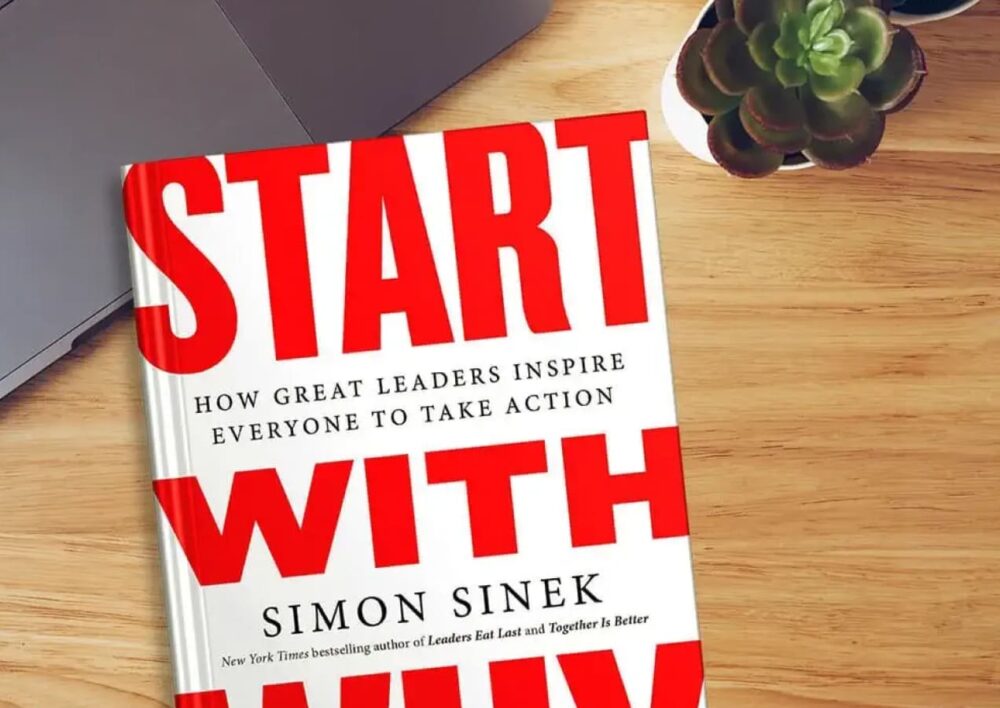
Simon Sinek’s Start with Why resonates deeply with me, both as a retired Green Beret and as a leader in the corporate world. The book’s core idea—that great leaders and organizations inspire others by clarifying their why—is a principle I’ve lived through and often reflect upon in my own leadership journey.
In the military, the mission is everything. You don’t take a hill or plan an operation without understanding the bigger purpose behind it. Sinek’s Golden Circle—starting with why, then addressing how and what—parallels the thought process behind mission planning. It’s not just about tactics; it’s about aligning action with a greater purpose that motivates teams to overcome any obstacle.
As a Chief People Officer, I’ve seen firsthand how articulating a clear why transforms not just individuals but entire organizations. Sinek’s examples of companies like Apple and movements like Martin Luther King Jr.’s illustrate how purpose-driven leadership is the foundation for building trust, loyalty, and resilience—qualities I’ve worked to instill in every environment I’ve been a part of.
What struck me most is Sinek’s emphasis on inspiration over manipulation. It’s a powerful reminder that long-term success comes from authentic leadership, not short-term tactics. Whether leading a team in combat, guiding an organization through change, or raising a family, starting with why is what drives meaningful, sustainable progress.
If I had one critique, it’s that the book occasionally oversimplifies the execution of why. While the concept is clear, implementing it in the messy realities of leadership—whether on a battlefield or in a boardroom—is far from easy. But maybe that’s the point: why is a compass, not a map. It guides the direction but leaves room for adaptability and creativity.
Start with Why is more than a book; it’s a mindset shift. For anyone leading others—or simply trying to lead a more intentional life—this is a must-read. Sinek reminds us that the why isn’t just a question; it’s the spark that lights the fire of purpose and drives us to create something greater than ourselves.

Ryan Holiday’s Stillness is the Key is a book that feels like it was written for someone who’s lived a life like mine. Having spent over two decades in the military, including time in Delta Force, I’ve known the chaos of war and the demands of leadership. Stillness, as Holiday defines it, isn’t about being inactive; it’s about finding clarity, purpose, and peace amidst the chaos—a skill that can mean the difference between survival and defeat, both on the battlefield and in life.
Holiday draws from philosophy, history, and modern examples to explore the physical, mental, and spiritual components of stillness. As someone who draws inspiration from Stoicism and the teachings of Marcus Aurelius, I found Holiday’s reflections to be a seamless extension of what I’ve studied and applied. The stories of great leaders, athletes, and thinkers reminded me of the power of disciplined thought and reflection, even under immense pressure.
One of the most powerful takeaways for me is Holiday’s emphasis on mastering inner chaos. In the military, there’s an old saying: “Calm is contagious.” The leader who can remain composed and focused during a firefight inspires the same in their team. Holiday captures this principle perfectly, showing how stillness isn’t just a personal practice but a way of influencing others and leading effectively.
As a leader in the corporate world now, I see the need for stillness more than ever. The relentless pace of business, coupled with constant demands on decision-making, can pull leaders into reactive, fear-based thinking. Holiday’s message is a timely reminder that stillness allows us to rise above the noise, think clearly, and act with purpose.
If I were to critique the book, it would only be that some of the examples feel overly polished or idealized. Stillness, in practice, is messy and difficult, especially when facing the unpredictable challenges of war zones or complex organizations. But Holiday acknowledges this struggle, which makes the book feel grounded and authentic.
Stillness is the Key is more than a philosophical treatise; it’s a guidebook for anyone seeking to live a life of greater intention and impact. Whether you’re a soldier, an executive, a parent, or simply someone searching for balance, Holiday’s wisdom is a beacon. For me, it’s a call to embrace the discipline of stillness—to pause, reflect, and act with the kind of clarity that aligns with my deepest values. It’s a book I’ll return to often, not just as a leader but as a human being striving to live a meaningful life.

David Brooks’ The Road to Character is more than just a book—it’s a guidepost for anyone striving to cultivate a life of deeper meaning, grounded in humility, moral integrity, and service to others. As someone engaged in leadership development, I found Brooks’ exploration of the dichotomy between “Adam I” and “Adam II” not only insightful but essential. This concept has profoundly influenced the framework I use to develop leaders within my company, particularly in fostering what Brooks terms the “eulogy virtues.”
The book draws from the teachings of Rabbi Joseph Soloveitchik, who introduced the idea of two opposing sides of human nature in his 1965 work The Lonely Man of Faith. Brooks builds on this by framing the struggle between Adam I and Adam II as a lifelong balancing act. Adam I represents the ambition-driven, success-oriented self—the part of us that thrives on achievement, career advancement, and personal accolades. This is the self that compiles resume virtues, the tangible skills and accomplishments we list in job applications. Adam II, on the other hand, embodies the quieter, introspective self—the one preoccupied with moral depth, humility, and serving a cause greater than oneself. These are the eulogy virtues, the traits people remember long after we’re gone.
What struck me most was Brooks’ assertion that while modern society overwhelmingly celebrates Adam I, it is Adam II who ultimately leads to fulfillment. As Rabbi James Rosenberg explains in his reflection on the book, Adam I “wants to conquer the world, [while] Adam II wants to obey a calling to serve the world.” This profound contrast is not about rejecting ambition but learning to temper it with selflessness and moral fortitude.
Brooks’ biographical sketches of figures such as Dwight D. Eisenhower, Dorothy Day, and George Marshall serve as powerful case studies in how flawed but morally driven individuals cultivated their inner Adam II over time. Each story underscores the importance of adversity and failure in shaping character—a theme I find especially relevant in leadership development. These figures did not abandon their Adam I ambitions; rather, they learned to subordinate them to higher principles, finding balance and purpose through humility and service.
In my own leadership program, the concept of the eulogy virtues has become a cornerstone for guiding emerging leaders. It challenges them to reflect on how they want to be remembered (legacy)—not just for their professional milestones but for their integrity, kindness, and contributions to the well-being of others. We have begun incorporating reflective exercises that ask leaders to craft their own eulogy, identifying the virtues they hope to embody (ideals) and working backward to integrate those virtues into their daily lives.
Brooks does not suggest we abandon Adam I. As Rosenberg highlights, we need Adam I’s ambition to earn a living and make a difference in the world. However, Brooks argues for a counterbalance, reminding us that Adam II ensures that our ambition does not lead us astray. This resonates deeply with me as I coach leaders navigating high-pressure environments. Without Adam II, ambition alone can lead to burnout, moral compromise, and an unfulfilled life.
The Road to Character is not prescriptive in the traditional sense. Brooks offers no easy solutions or formulas. Instead, he invites readers into a reflective journey, encouraging them to wrestle with their dual natures and strive for moral growth. For those in leadership, whether in business, the military, or community organizations, this book serves as a crucial reminder that true leadership is not just about achieving results but about becoming the kind of person others are proud to follow.
I wholeheartedly recommend The Road to Character to anyone seeking to develop not just better leaders but better human beings. In an era that often glorifies individual achievement, Brooks’ call to nurture the quiet, steadfast virtues of Adam II is both timely and transformative.
—Be a better human!