
In the whirlwind of modern life, chaos often seems unavoidable. From personal struggles to societal upheavals, the forces around us can disrupt our sense of stability, leaving us yearning for meaning. Viktor Frankl, a Holocaust survivor and psychiatrist, profoundly understood this struggle. Through his experiences, he discovered that the search for meaning is not just about enduring chaos but also about achieving a state of equilibrium and homeostasis—a balance that allows us to navigate life’s challenges with purpose and resilience.
Frankl’s Insights: Meaning as a Path to Equilibrium
During his time in Nazi concentration camps, Frankl observed that those who survived were often those who could find meaning amidst their suffering. He realized that while the external environment was filled with chaos, keeping an internal sense of balance—an equilibrium—was crucial. This equilibrium wasn’t just about enduring hardships; it was about finding a deeper sense of purpose that allowed individuals to stabilize their inner world, even when the outer world was in turmoil.
Frankl’s concept of Logotherapy highlights the importance of this balance. He proposed that life’s primary drive is not pleasure or power but meaning. By focusing on meaningful goals, individuals can achieve a state of homeostasis, where the mind and body are aligned in their pursuit of purpose. This alignment creates a sense of calm and resilience, allowing one to withstand external pressures without losing the core of who they are.
Applying Equilibrium and Homeostasis to Modern Life
Today, the chaos of life manifests differently—through constant connectivity, overwhelming responsibilities, and societal divisions. The challenge remains the same: How do we find meaning while maintaining a sense of balance and inner peace?
Personal Balance in a Chaotic World
On an individual level, the quest for meaning is also a quest for equilibrium. Modern life often pulls us in multiple directions, with work, family, and personal aspirations competing for our attention. The key is to establish homeostasis—an internal balance where we can meet these demands without losing our sense of self. This balance can be achieved by focusing on what truly matters, setting priorities, and being mindful of our physical and mental well-being.
Frankl’s teachings remind us that even in the face of overwhelming tasks and responsibilities, it’s possible to find moments of stillness and clarity. These moments, where we reconnect with our core values and purpose, allow us to reset our internal balance and continue moving forward with renewed strength.
Societal Balance: Unity Amidst Division
On a broader scale, society too must seek equilibrium. In a world increasingly polarized by political, racial, and economic divides, finding a common purpose is essential for restoring social homeostasis. This involves fostering dialogue, understanding, and empathy across divides—rebuilding the societal fabric that holds us together.
Frankl’s philosophy can guide us here as well. By focusing on shared goals and values, we can begin to stabilize our communities, ensuring that despite the chaos, we remain grounded in a collective sense of purpose.
Noö-dynamics and Homeostasis: The Tension that Drives Growth
Frankl’s concept of noö-dynamics—the tension between what one has achieved and what one still seeks to accomplish—mirrors the natural processes of equilibrium and homeostasis in biology. Just as living organisms maintain stability through constant adjustments, we too must navigate the tension between our current state and our future goals. This tension is not something to be avoided but embraced, as it drives personal growth and helps us find meaning in our actions.
In contemporary life, this means recognizing that challenges and disruptions are not inherently negative. Instead, they are opportunities to adjust, recalibrate, and achieve a new state of balance—one that brings us closer to our true purpose.
The Role of Logotherapy Today: Balancing Mind and Spirit
Logotherapy, with its focus on meaning, can be seen as a tool for achieving psychological and spiritual homeostasis. By helping individuals focus on meaningful goals, Logotherapy promotes a sense of balance and well-being, even in the face of life’s inevitable challenges. It teaches us that true equilibrium comes not from avoiding difficulties but from finding purpose in overcoming them.
Conclusion: The Art of Balancing Chaos and Meaning
Viktor Frankl’s legacy teaches us that finding meaning in chaos is not just about enduring; it’s about achieving a state of equilibrium and homeostasis in our lives. Whether facing personal challenges or societal turbulence, the key is to keep our balance, aligning our actions with our values and purpose.
As we continue to navigate the complexities of modern life, let us remember that equilibrium is not a static state but a dynamic process. It requires constant adjustment, mindfulness, and a deep connection to what truly matters. In doing so, we can transform chaos into growth, division into unity, and uncertainty into a purposeful journey.
—Be a better human!
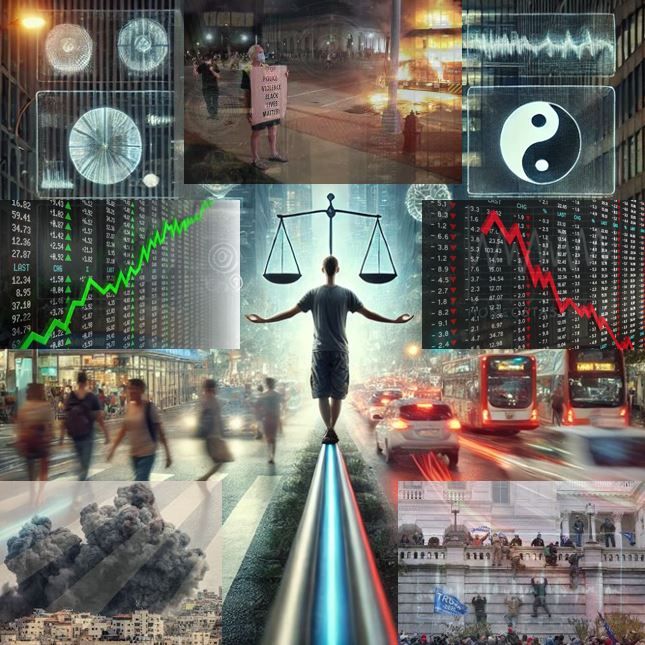
Finding Meaning in the Midst of Chaos: Balancing Equilibrium and Homeostasis
In the fast pace of modern life, chaos is inevitable, disrupting our stability and leaving us longing for meaning. Viktor Frankl, a Holocaust survivor and psychiatrist, found that finding meaning helps us achieve equilibrium amidst chaos. By focusing on meaningful goals, we can achieve a state of calm and resilience, both personally and in society.
3–5 minutes



Leave a Reply